
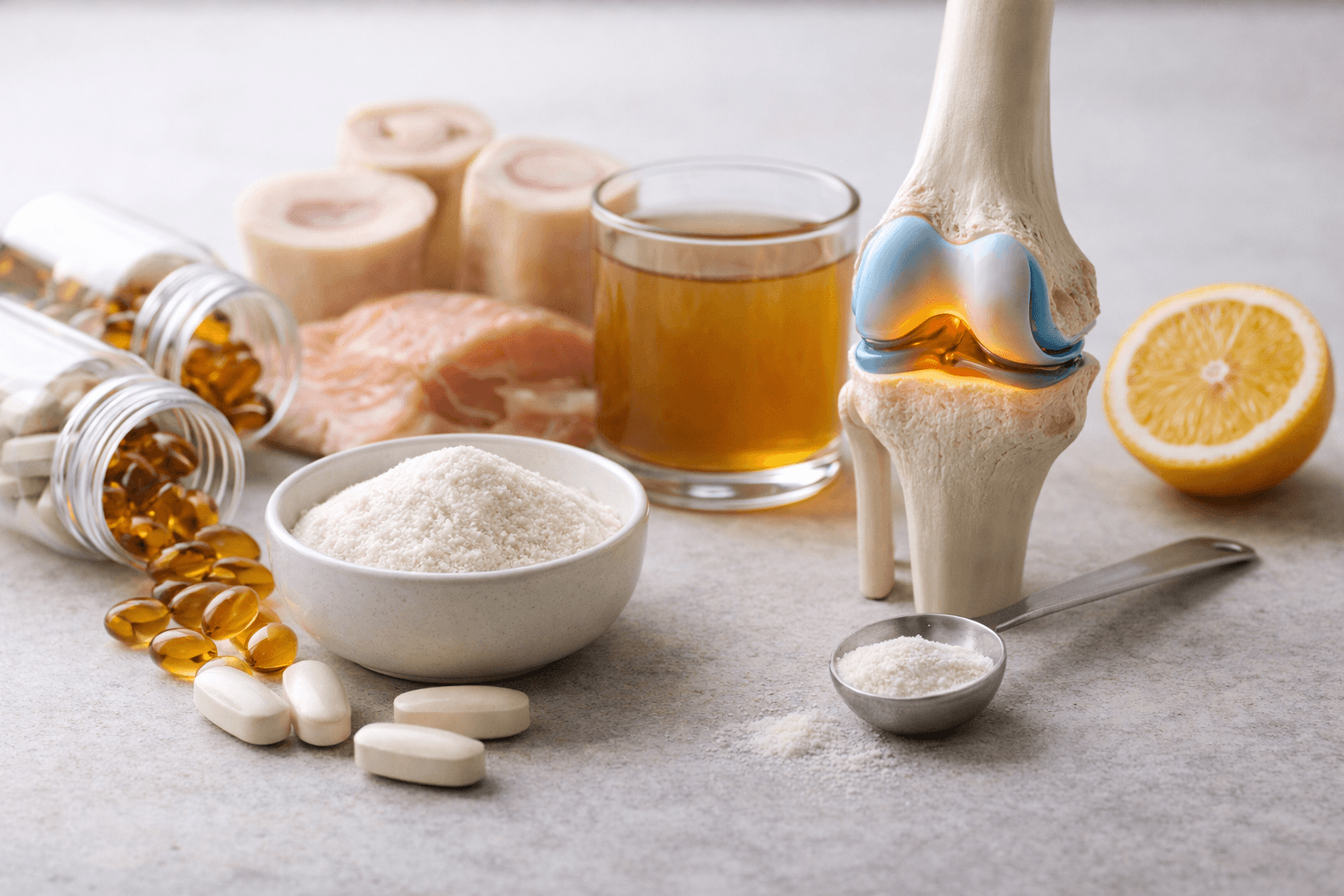
Joint stiffness and reduced mobility are common concerns, particularly with ageing, repetitive activity, or prolonged inactivity. Many people describe this sensation as “dry” or “unlubricated” joints — but what does joint lubrication actually mean, and how can it be supported naturally?
This article explores how joint lubrication works in the body, the lifestyle factors that influence it, and which nutrients and supplements are supported by scientific evidence in maintaining joint comfort and mobility.
What Does “Joint Lubrication” Mean?
Most movable joints in the body — such as the knees, hips, shoulders, and fingers — are synovial joints. These joints rely on a specialised fluid, called synovial fluid, to reduce friction between cartilage surfaces during movement.
Synovial fluid serves several roles:
- acts as a lubricant to minimise friction
- delivers nutrients to cartilage, which has no direct blood supply
- absorbs shock during weight-bearing and movement
Healthy joints are not lubricated by oils or fats, but by a dynamic fluid system that responds to movement, hydration, and overall metabolic health.
Reduced movement, dehydration, inflammation, or cartilage degradation can all alter the quality and quantity of synovial fluid, contributing to stiffness and discomfort.
Natural Ways to Support Joint Lubrication
Before considering supplements, it is important to recognise the foundational factors that influence joint health.
Movement
Regular, low-impact movement stimulates the circulation of synovial fluid within joints. Activities such as walking, cycling, swimming, and mobility exercises encourage joints to remain nourished and mobile.
Hydration
Synovial fluid is largely water-based. Even mild dehydration can affect joint comfort and tissue elasticity, highlighting the importance of adequate fluid intake.
Dietary Patterns
Chronic low-grade inflammation may negatively affect cartilage and joint tissues. Diets rich in vegetables, fruits, omega-3 fatty acids, and polyphenols are associated with better joint health outcomes over time.
Which Supplements Support Joint Lubrication and Comfort?
Certain nutrients are commonly included in joint health supplements due to their roles in cartilage structure, synovial fluid composition, and connective tissue support.
Glucosamine and Chondroitin
Glucosamine and chondroitin are structural components of cartilage and are among the most extensively studied ingredients in joint support supplements.
Research suggests they may:
- support cartilage matrix integrity
- contribute to long-term joint comfort
- slow cartilage degradation in some individuals
While results vary, benefits — when observed — tend to be modest and require consistent use over months, rather than short-term supplementation.
Hyaluronic Acid for Joints
Hyaluronic acid is a naturally occurring molecule found in high concentrations in synovial fluid.
Its primary functions include:
- maintaining synovial fluid viscosity
- supporting shock absorption
- facilitating smooth joint movement
Supplemental hyaluronic acid has been studied for its potential to support joint lubrication, particularly in older adults and those with reduced synovial fluid quality.
What About Collagen for Joints?
Collagen is frequently marketed as a solution for joint health, but its role is often misunderstood.
Collagen supplements provide amino acids that may support connective tissue synthesis, but collagen itself is not delivered directly to cartilage. Additionally, effective collagen doses are typically measured in grams, which makes capsules a less suitable format.
For a deeper exploration of this topic, see:
Is It Worth Taking Collagen Supplements? What the Science Says — and Why Capsules Often Miss the Mark
Bone and Joint Supplements: A Broader View
A comprehensive bone and joint supplement strategy often focuses on supporting the body’s own repair mechanisms rather than targeting a single compound.
Key supportive nutrients include:
- vitamin C (for collagen synthesis)
- zinc (for tissue repair and enzyme activity)
- selenium (for antioxidant protection)
Rather than “lubricating” joints in a mechanical sense, these nutrients help maintain the biological systems that preserve joint function over time.
Final Thoughts
Joint lubrication is not something that can be added from the outside. It is a process governed by movement, hydration, tissue health, and long-term nutritional support.
Natural strategies — including regular activity, adequate fluid intake, and well-formulated joint health supplements — may help maintain joint comfort and mobility when used consistently and realistically.
As with most aspects of musculoskeletal health, gradual, sustained support tends to outperform quick fixes.
References
- Colletti A, Cicero AFG. Nutraceutical Approach to Chronic Osteoarthritis: From Molecular Research to Clinical Evidence. Int J Mol Sci. 2021 Nov 29;22(23):12920. PMCID: PMC8658017.
- Henrotin Y, Raman R, Richette P, Bard H, Jerosch J, Conrozier T, Chevalier X, Migliore A. Consensus statement on viscosupplementation with hyaluronic acid for the management of osteoarthritis. Semin Arthritis Rheum. 2015 Oct;45(2):140-9. PMID: 26094903.
- McAlindon TE, LaValley MP, Gulin JP, Felson DT. Glucosamine and chondroitin for treatment of osteoarthritis: a systematic quality assessment and meta-analysis. JAMA. 2000 Mar 15;283(11):1469-75. PMID: 10732937.
- Wandel S, Jüni P, Tendal B, Nüesch E, Villiger PM, Welton NJ, Reichenbach S, Trelle S. Effects of glucosamine, chondroitin, or placebo in patients with osteoarthritis of hip or knee: network meta-analysis. BMJ. 2010 Sep 16;341:c4675. PMID: 20847017.