
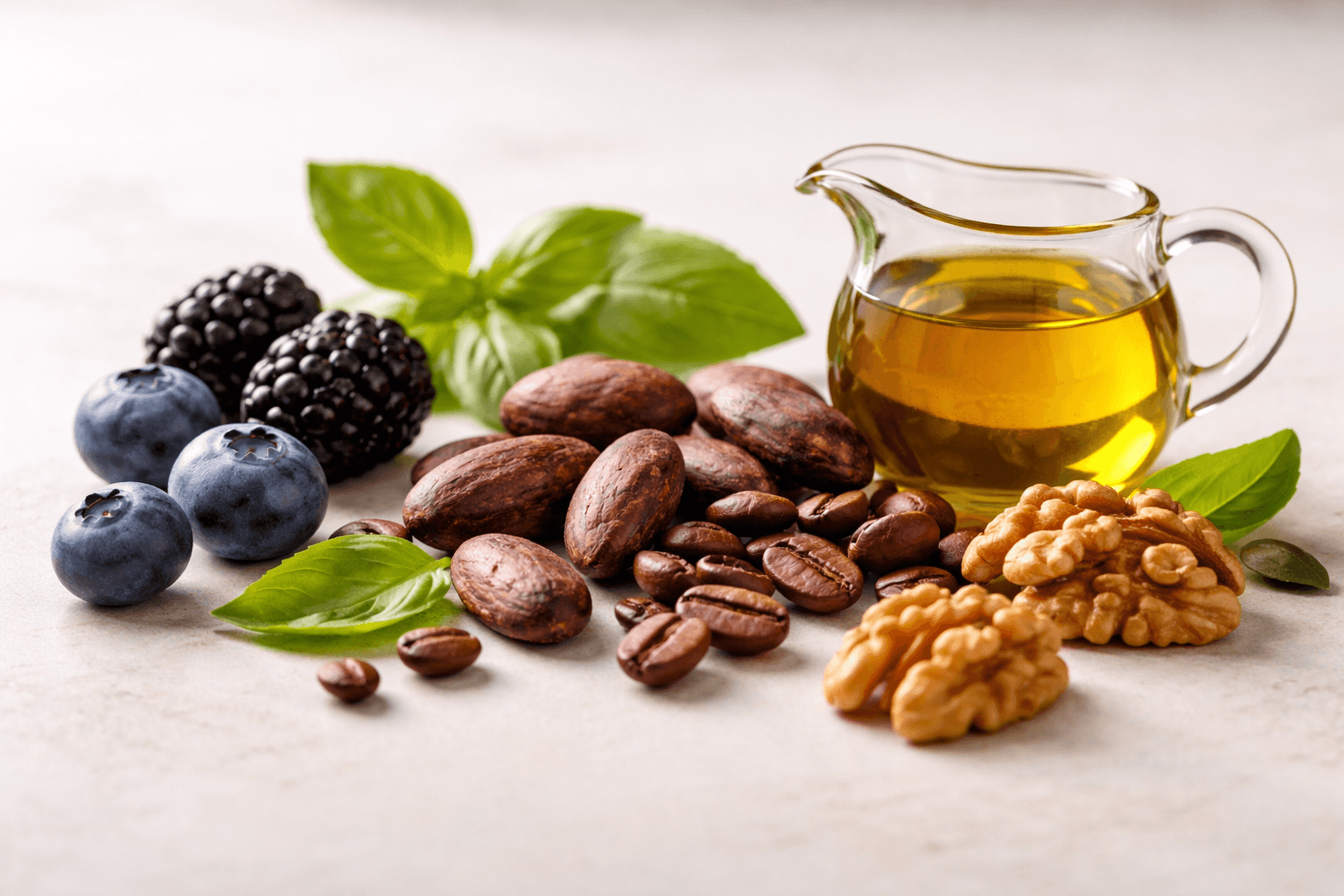
Heart health is shaped by many interconnected factors, including physical activity, sleep, stress management, smoking status, and diet. Among dietary components, increasing attention has been given to polyphenols — naturally occurring compounds found in plant foods that appear to support cardiovascular health when consumed regularly as part of a balanced diet.
Rather than acting as a single “heart-protective” nutrient, polyphenols influence multiple biological pathways linked to long-term vascular health. Understanding what they are, where they’re found, and how they work helps place them in the right context — as part of a broader dietary pattern, not a quick fix.
In this article, you’ll explore what polyphenols do to your body, how they support heart health, and which everyday foods are richest in polyphenols—based on scientific evidence.
What Are Polyphenols?
Polyphenols are a large and diverse group of bioactive compounds produced by plants. They contribute to colour, flavour, and defence mechanisms in plant foods and, when consumed by humans, may influence processes related to oxidative balance, inflammation, and vascular function.
Polyphenols are not vitamins or minerals. Instead, they act through subtle, cumulative interactions with the body — often mediated by gut microbiota — which helps explain why their effects are typically associated with long-term dietary habits, rather than short-term supplementation.
What Do Polyphenols Do to Your Body?
Polyphenols interact with the body in several ways:
supporting antioxidant balance
influencing low-grade inflammation
contributing to endothelial (blood vessel) function
interacting with gut bacteria, which convert polyphenols into biologically active metabolites
Rather than targeting a single pathway, polyphenols tend to exert broad, system-level effects. This may explain why diets rich in polyphenol-containing foods are consistently associated with more favourable cardiovascular profiles in observational research.
What Foods Are Highest in Polyphenols?
Polyphenols are widely distributed across plant-based foods, though concentrations vary depending on the type of food, processing, and preparation.
Common polyphenol-rich foods include:
berries (such as blueberries, strawberries, and blackberries)
coffee and green tea
cocoa and dark chocolate
extra virgin olive oil
nuts (particularly walnuts)
herbs and spices
Because different polyphenols act through different mechanisms, dietary variety appears to be more important than focusing on any single food source.
Is Coffee a Polyphenol?
Coffee itself is not a polyphenol, but it is one of the richest dietary sources of polyphenols in many populations.
Coffee contains compounds such as chlorogenic acids, which can contribute substantially to total daily polyphenol intake — sometimes more than fruits and vegetables in habitual diets. This is largely because coffee is consumed regularly and in relatively large volumes.
That said, tolerance to caffeine varies between individuals, and polyphenol intake should be considered within the context of overall health, sleep quality, and individual sensitivity.
How Do Polyphenols Relate to Heart Health?
Observational studies consistently associate diets rich in polyphenol-containing foods with improved cardiovascular markers. These associations include:
more favourable cholesterol profiles
improved vascular function
lower calculated cardiovascular disease risk scores
In long-term cohort studies, individuals with higher levels of polyphenol metabolites — measured objectively through urine analysis — tend to show a more favourable cardiovascular risk profile. While these findings do not prove cause and effect, they strengthen the link between polyphenol-rich dietary patterns and heart health.
Importantly, these benefits appear to reflect overall dietary patterns, rather than isolated compounds or short-term interventions.
How Do I Increase My Polyphenol Intake?
Increasing polyphenol intake does not require supplements or restrictive diets. Practical, sustainable approaches include:
eating a wide range of colourful fruits and vegetables
choosing extra virgin olive oil as a primary fat
including berries regularly
consuming coffee or tea according to individual tolerance
using herbs and spices generously in cooking
These habits align closely with dietary patterns — such as the Mediterranean diet — that are consistently associated with cardiovascular and metabolic health.
A Food-First Perspective
Polyphenols appear to work best when consumed as part of whole foods, where they coexist with fibre, healthy fats, vitamins, minerals, and other bioactive compounds. In this context, their effects are gradual and cumulative, reinforcing the importance of consistency over time.
Rather than viewing polyphenols as isolated “active ingredients”, current evidence supports a food-first, pattern-based approach to heart health.
Final Thoughts
Polyphenol-rich foods such as berries, coffee, cocoa, nuts, and olive oil are consistently linked to markers of better cardiovascular health when consumed regularly as part of a balanced diet. While observational studies cannot establish causation, the convergence of dietary data, metabolite analysis, and biological plausibility supports their role in long-term heart health.
When researchers examine what polyphenols do to the body over time, the most consistent findings relate to vascular function, cholesterol metabolism, and oxidative balance. Howevere, as with most aspects of nutrition, benefits are shaped less by individual compounds and more by how foods work together.
References
Li Y, Yan X, et al. Higher adherence to (poly)phenol-rich diet is associated with lower CVD risk in the TwinsUK cohort. BMC Med. 2025 Nov 27;23(1):645. PMID: 41299455.
Rodriguez-Mateos A, Le Sayec M, Cheok A. Dietary (poly)phenols and cardiometabolic health: from antioxidants to modulators of the gut microbiota. Proc Nutr Soc. 2025 Sep;84(3):279-289. PMID: 38316606.
Manach C, Scalbert A, Morand C, Rémésy C, Jiménez L. Polyphenols: food sources and bioavailability. Am J Clin Nutr. 2004 May;79(5):727-47. PMID: 15113710.
Del Rio D, Rodriguez-Mateos A, ET AL. Dietary (poly)phenolics in human health: structures, bioavailability, and evidence of protective effects against chronic diseases. Antioxid Redox Signal. 2013 May 10;18(14):1818-92. PMID: 22794138.